Most men handle thinning hair in exactly the wrong direction. They grow it longer, hoping length will cover what is missing, and end up with thin, separated strands that reveal more scalp than a short cut ever would. They part it where they always have, even as that part widens. The result draws the eye to precisely the thing they were trying to hide.
Barbers who cut a lot of thinning hair, which is to say all experienced barbers, work by a few consistent principles. Shorter and more even usually looks fuller. Texture beats length. And the style has to match the current stage of thinning, not the stage from five years ago. This guide lays out those principles plainly.
Matching the cut to the pattern
| Pattern | What usually works | What usually backfires |
|---|---|---|
| Receding hairline | Shorter sides, texture on top, fringe kept short and forward or cropped | Growing the front long and sweeping it back, which exposes the recession |
| Thinning crown | Keeping the crown area shorter so thin and thick zones blend | Long hair around the crown that separates and shows scalp in clumps |
| Overall thinning | An even, shorter cut all over, including a buzz at a uniform length | A combover from a deep side part, which advertises the thinness it covers |
| Early thinning | Your usual cut, slightly shorter, with texture instead of length on top | Panic changes. Most early thinning needs adjustment, not a new identity |
The common thread is contrast. Thinning becomes obvious when long, sparse hair sits next to thicker hair or bare scalp. Evening out the lengths reduces that contrast, and the eye reads the result as a deliberate short cut rather than a situation being managed.

Product mistakes that make thin hair look thinner
Heavy, wet-look products are the enemy. Gels and oils clump fine hair into separated strands, and separated strands show scalp. A small amount of matte product, worked through dry or nearly dry hair, gives texture without clumping. Often, the best amount is about half of what the container suggests, applied to the ends of the hair rather than the scalp.
Heat and rough handling cost hair you would rather keep. Scrubbing with a towel, blasting with a hot dryer at close range, and wearing tight hats over sweaty hair all day are hard on fragile hair. None of these single habits explains thinning, which is mostly genetics, but gentle handling keeps the hair you have looking its best for longer. In a Fort Mill summer, a rinse after a sweaty day is kinder than leaving salt and product in overnight.
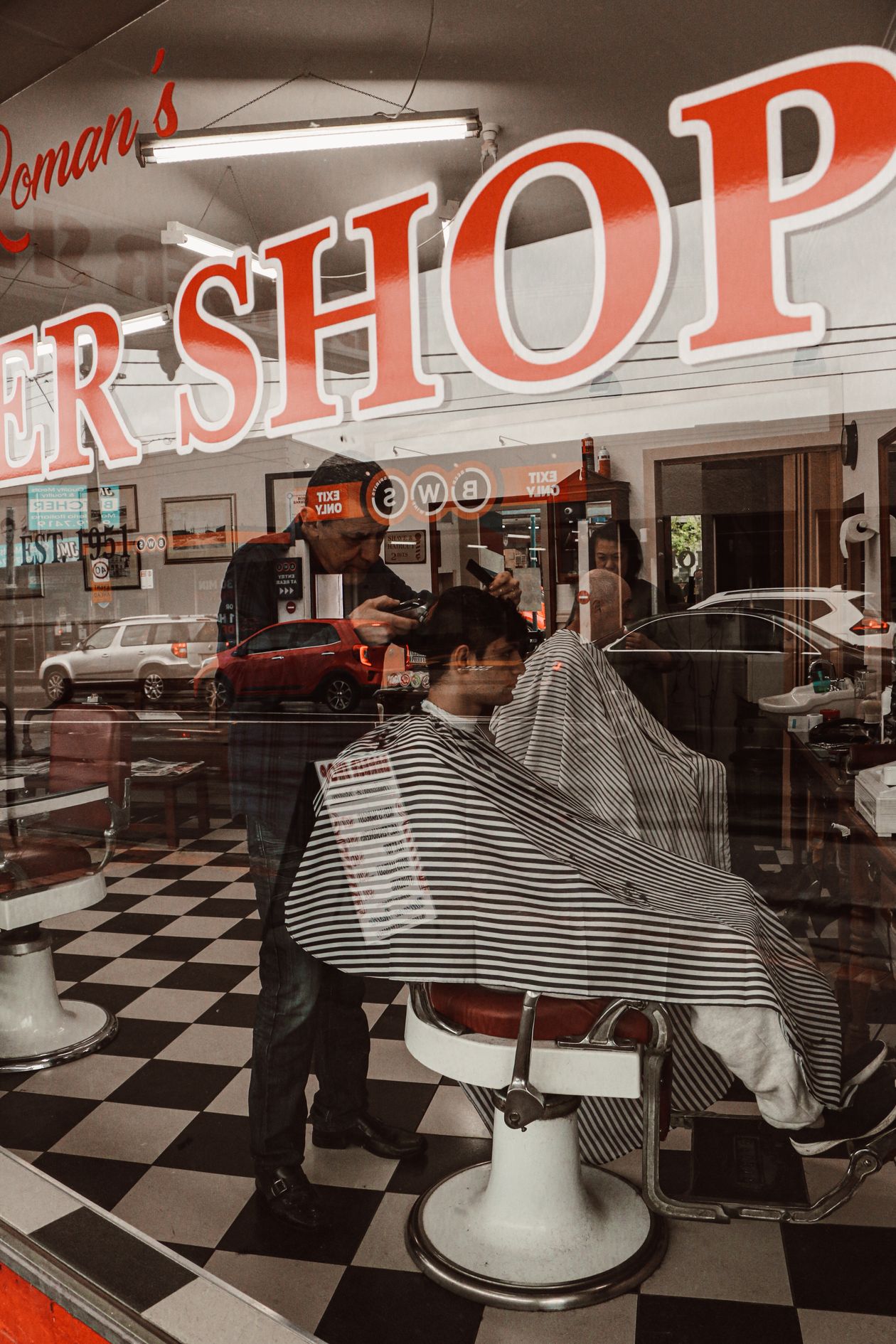
Knowing when the buzz is the best answer
For advanced thinning, the most confident-looking option is often the simplest: an even buzz, or a very short cut with the sides matched to the top. It removes the contrast entirely, it needs almost no product, and it suits more head shapes than men fear. Plenty of customers arrive dreading it and leave wondering why they waited, because the result reads as a choice rather than a concession.
This is a conversation a good barber has had hundreds of times, and there is no embarrassment in it at a hometown shop. Describe what bothers you, ask what the barber would do at your stage, and try the shorter version. Hair at these lengths grows back to the previous style in a few weeks if you hate it, which makes the experiment nearly free.
What to say in the chair
Bring the conversation into the open with plain words: tell the barber where the thinning bothers you most, what you have been doing about it, and that you want the cut that looks best on the hair you have now. That gives permission for honesty and gets you the barber's real expertise instead of a diplomatic version of your old style. Ask what length on the sides balances your top, ask how it should be styled in the morning in under two minutes, and ask when to come back to keep it in its best window. Thinning hair punishes neglect more than fuller hair does, because the shape is doing more work. A shorter, kept cut, maintained on schedule, is the closest thing to a solution this subject honestly offers, and it is a good one.
Common questions
Will a shorter cut really look fuller?
In most cases, yes. Shorter, even lengths remove the contrast between thin areas and thick ones, and texture on top breaks up the view of the scalp.
Should I change my part as my hair thins?
Experiment once with your barber's guidance. Moving or dropping a hard part line can help, but a deep combover part usually makes thinning more obvious, not less.
Can a barber tell me honestly if a style will not work?
A good one will, and that honesty is worth finding. Ask directly what they would recommend for your hair as it is now, and expect a straight answer.
Photos in this guide are representative stock images.
← All guides from Fort Mill Barber Shop← Back to Fort Mill Barber Shop